
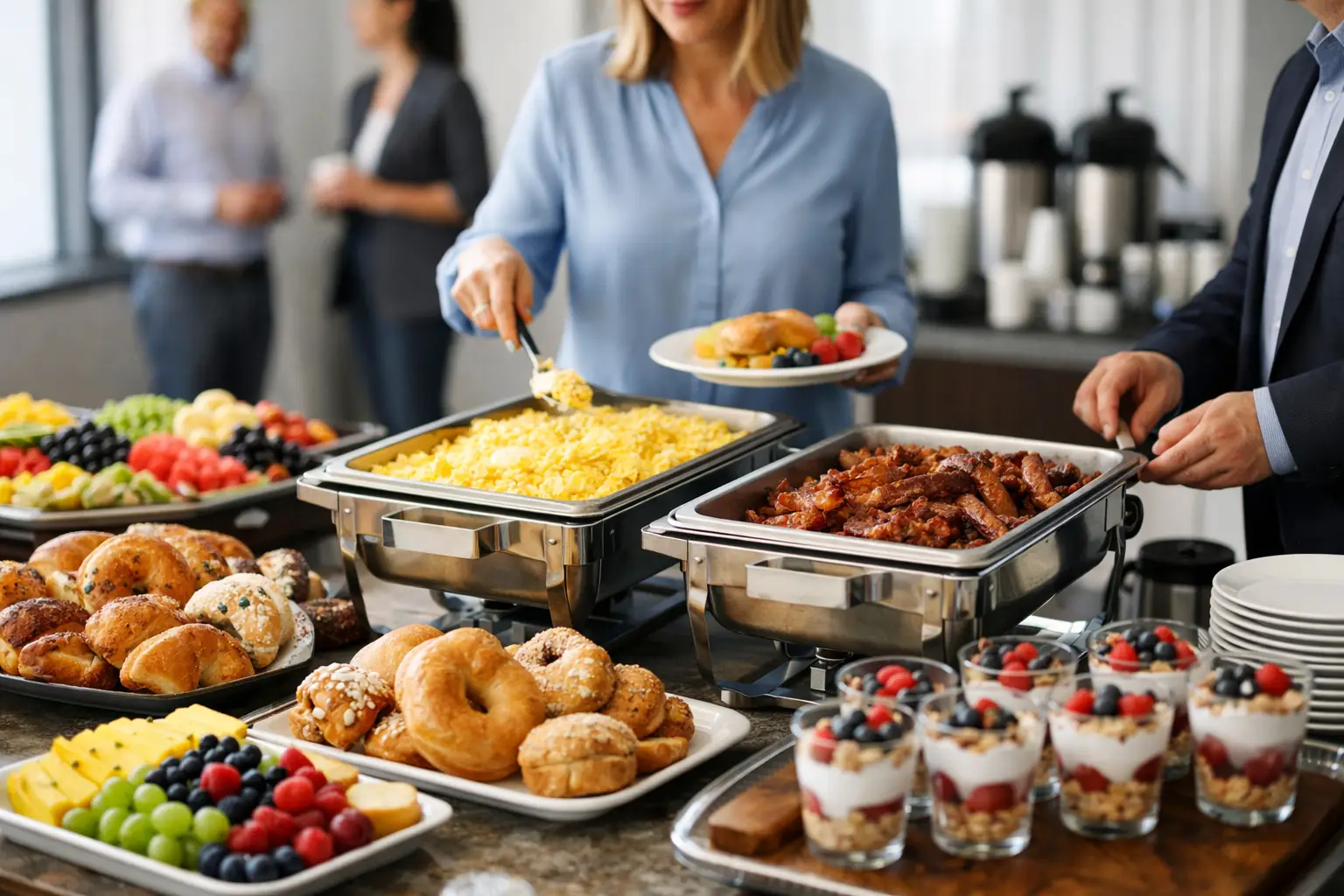
The morning meeting starts at 9:00. Half the crew is running on coffee, someone is gluten-free, someone else is vegan, and one person will absolutely ask where the bacon is. That is exactly why knowing how to pick breakfast catering is less about ordering a pile of pastries and more about reading the room. The right spread gets people fed, keeps the schedule moving, and gives your gathering a little more good energy before the day gets weird.
Start With the Actual Crowd, Not a Guess
Before you choose bagels, burritos, or a coffee box big enough to wake the neighborhood, get clear on who is eating. A 7:30 a.m. construction meeting, a school fundraiser, a bridal party getting ready, and a creative team brainstorm all have different breakfast personalities.
Start with your final headcount, then ask whether everyone will be eating or whether some guests are likely to grab coffee and keep moving. For a sit-down event, plan for nearly every person to eat. For an optional office breakfast, a little less food may make sense. The goal is generous, not a mountain of untouched muffins in the break room at 3:00 p.m.
Timing matters, too. If breakfast is replacing a meal, choose filling options. If it is a quick welcome table before a longer event, lighter bites and great coffee may do the job. A breakfast sandwich is a hero when people need real fuel. Fresh fruit, yogurt, and pastries work better when lunch is right around the corner.
How to Pick Breakfast Catering for Mixed Diets
A crowd-pleasing order should not make guests with dietary preferences feel like an afterthought. The easiest move is to build variety into the center of the menu instead of creating one lonely “special” item on the side.
Choose a balance of classic comfort food and plant-forward options. Think egg sandwiches or breakfast burritos alongside vegan wraps, fruit, potatoes, and hearty bowls. If gluten-free guests are attending, confirm which items can be prepared safely and whether they are packaged separately. Vegetarian is not automatically vegan, and gluten-free is not automatically low-contact, so it pays to ask direct questions.
You do not need to turn breakfast into a complicated spreadsheet. You just need enough range that each guest can make a satisfying plate. A simple formula works well: offer one egg-based main, one meat option, one vegetarian or vegan main, something fresh, and a gluten-free-friendly choice when needed.
Do Not Forget the Drink Situation
Coffee is often the real guest of honor. Estimate at least one coffee serving per attendee for an early event, with a little extra for groups that take their caffeine seriously. Add tea, water, and juice or smoothies if the gathering is longer, more social, or family-focused.
For an office breakfast, coffee that arrives hot and ready is usually more useful than a complicated drink menu. For a brunch shower or weekend gathering, colorful smoothies and specialty coffee can make the spread feel more festive. It depends on whether you are feeding a meeting or setting a mood.
Pick Food That Fits the Schedule
Some breakfast foods travel like champs. Others are at their best the second they hit the table. This is where a good caterer earns their stripes.
Breakfast sandwiches, wraps, burritos, home fries, pastries, fruit trays, and individually packaged items tend to hold up well for delivery or pickup. Delicate dishes with poached eggs, crispy toppings, or elaborate plating may lose some magic if they sit too long. If guests will eat in waves, ask for items that stay tasty and easy to serve over an hour or two.
For a short meeting, individually wrapped sandwiches can keep things tidy and fast. For a relaxed brunch, platters and buffet-style trays invite people to hang around, build a plate, and talk. Neither approach is better. It comes down to your space, serving setup, and whether people will be eating with one hand while opening laptops with the other.
Set a Budget That Includes the Details
The advertised per-person price is only part of the picture. A realistic breakfast catering budget should account for food, beverages, delivery or pickup logistics, taxes, gratuity, serving supplies, and any last-minute additions.
If your budget is tight, spend on the things guests will notice most: fresh food, reliable portions, and coffee. You can often skip extra decorations or overly elaborate presentation in favor of a better main spread. On the other hand, if this is a client event, birthday brunch, or milestone celebration, a few extras can make the table feel more intentional.
Ask whether utensils, napkins, cups, labels, warming trays, and serving tools are included. Nobody wants to discover that the breakfast burritos arrived perfectly warm but there are no napkins within a five-mile radius.
It also helps to decide how much food waste you can live with. Ordering a little extra is smart for a hungry team or a long event. Ordering wildly beyond your headcount is not always a sign of hospitality. It can be a sign that nobody wanted to do math before 8:00 a.m.
Ask the Caterer the Questions That Prevent Chaos
A great breakfast catering partner should make your morning easier, not hand you a mystery box and a prayer. Before you order, confirm the practical stuff. These questions are worth asking:
- What portions do you recommend for my group size and event timing?
- Which menu items work best for delivery, pickup, or a buffet setup?
- How are vegan, vegetarian, gluten-free, and allergy-related requests handled?
- What is included with the order, from coffee cups to serving utensils?
- When should I place the order, and what is the latest time I can update the headcount?
Clear answers are a good sign. So is a caterer who asks you questions back. If they want to know your guest count, arrival time, dietary needs, and setup, they are thinking beyond the menu.
Plan the Setup Before the Food Arrives
Breakfast catering can be delicious and still feel disorganized if there is nowhere to put it. Make room for the food, drinks, plates, napkins, and a separate spot for dietary-specific items. If the event is in an office, check whether there is access to tables, outlets, trash bins, and a place to wash hands.
Labeling helps more than people think, especially with mixed diets. A quick sign for vegan, vegetarian, gluten-free, or spicy items lets guests choose confidently and keeps your host from answering the same question 14 times. If food will be sitting out, follow the caterer’s guidance on temperature and serving time.
For Huntington gatherings that need a little more color than the standard conference-room bagel box, Stella Blue Bistro can bring together breakfast comfort food, coffeehouse favorites, and options for different eaters without draining the personality out of the party.
The best breakfast spread feels easy because someone planned it well. Give your guests food they are excited to spot on the table, leave room for different appetites, and let the first hour of your event start with good coffee, full plates, and a little extra joy. ☀️
Leave a Reply