
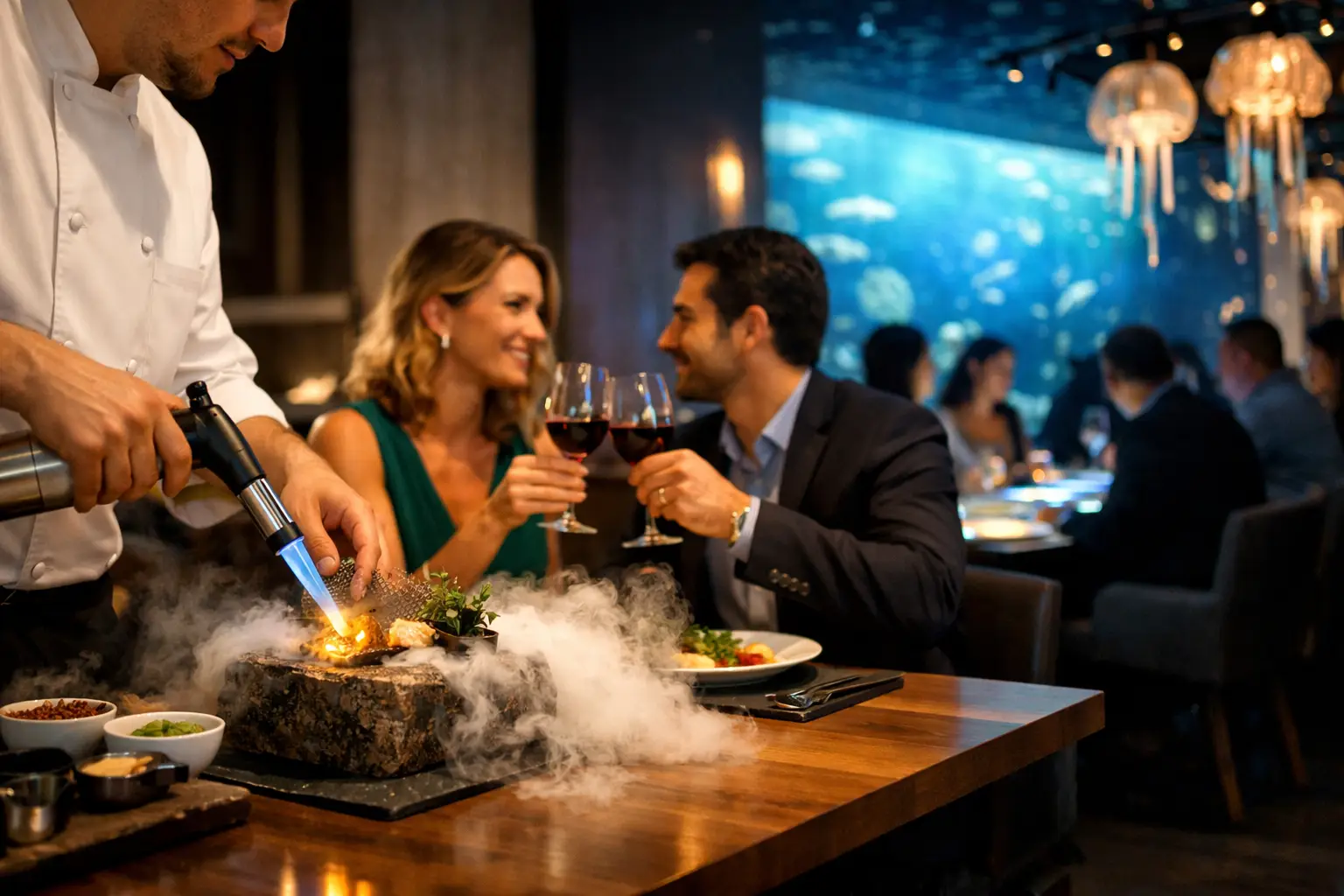
A great brunch is not just the plate that lands in front of you. It is the song playing when you walk in, the friend who says, “You have to try this,” the coffee that keeps the conversation going, and the little feeling that you have landed somewhere with a point of view. That is why experiential dining trends have moved far beyond white-tablecloth theatrics and gimmicky photo ops. People want meals with a mood.
For neighborhood cafés, that is very good news. The most meaningful dining experiences do not need smoke machines, a 12-course tasting menu, or a reservation booked three months out. They need personality, care, and enough thoughtful details to make a Tuesday morning coffee run feel different from every other errand on the list.
Experiential Dining Trends Are Getting More Personal
The big shift is simple: diners are choosing places that give them something to feel, not only something to eat. Food still has to be delicious, obviously. A funky mural cannot rescue a dry breakfast sandwich. But when the food is craveable and the setting has its own rhythm, a café becomes part of someone’s routine, their weekend plan, or their “meet me there” text thread.
That experience can be colorful and loud, or quiet and cozy. It depends on the crowd and the neighborhood. A remote worker may want a sunny corner, a solid latte, and a lunch that does not make the afternoon feel like a nap. A family may need a relaxed space where different appetites are welcome. Friends meeting for brunch want food worth sharing, but they also want a table where nobody feels rushed out after 40 minutes.
The common thread is authenticity. Diners can spot a manufactured “vibe” from a mile away. A real experience comes from choices that connect: the menu, music, staff energy, design, and local relationships all telling the same story.
The New Main Course: A Sense of Place
One of the strongest experiential dining trends is the return of restaurants with a clear identity. For a while, plenty of cafés looked interchangeable: the same neutral palette, the same generic playlist, the same menu written for everyone and no one. Now, diners are rewarding places that are willing to be specific.
A Huntington café does not need to pretend it is in Manhattan, Miami, or a glossy social media feed. It can lean into what makes the North Shore feel like home: familiar faces, neighborhood conversations, local creativity, a little weekend energy, and food that works for real life. That sense of place matters because it makes a visit hard to copy.
At Stella Blue Bistro, a colorful, music-loving atmosphere is not background decoration. It is part of the meal. The point is not to make every guest a superfan of the same band or era. The point is to give the room character. A space with personality gives people something to talk about before the first burrito hits the table.
Menus That Let the Whole Table Eat Happily
Experiences fall flat when half the group has to settle. That is why inclusive menus are no longer a nice extra. They are central to the way groups choose where to meet.
The best brunch menus make room for the classic-order loyalist, the vegan friend, the gluten-free guest, the smoothie person, and the person who woke up craving a loaded breakfast wrap. Nobody wants to hold a committee meeting before ordering coffee. When choices are thoughtful, mixed-diet groups can relax and focus on each other.
This does not mean a menu has to be a novel. In fact, too many choices can slow down the experience. The sweet spot is a focused menu with enough range to feel generous: hearty breakfast sandwiches, bowls with real staying power, plant-based options that feel like actual food rather than an apology, and lunch choices that travel well for takeout.
There is a trade-off here. Dietary flexibility only feels hospitable when quality stays high. A vegan brunch item should be just as tempting as the bacon-and-eggs option. Gluten-free should not mean joy-free. When every item is made with the same attention, inclusivity becomes a source of confidence, not confusion.
Small Rituals Beat Big Spectacles
Not every experience needs an event calendar and a spotlight. Often, the details people remember are wonderfully small: a barista who knows the usual order, a playlist that makes a rainy morning less gray, a cheerful sign that makes someone smile before they walk in, or a special that gives regulars a reason to come back this week.
These rituals create familiarity without becoming stale. Think of the regular who always grabs a coffee before school drop-off, the two friends with a standing Saturday brunch tradition, or the team that orders lunch for a meeting every month. The food may vary, but the feeling of being welcomed should stay steady.
Events can build on that foundation. Live music, local art, seasonal menu drops, themed brunches, and community fundraisers give diners a reason to gather. The key is making them fit the restaurant’s personality. A random event may create a brief spike in traffic. An event that feels native to the space can become part of local culture.
Social Media Is the Invitation, Not the Experience
Yes, people still photograph food. A bright smoothie, a stacked sandwich, or a wildly good brunch spread deserves its moment in the camera roll. But the most durable version of social buzz is not a staged wall with angel wings. It is a customer posting because they genuinely had a good time.
That changes how restaurants should think about shareability. A dish should look appetizing because it is generously made, not because it has been engineered into an awkward tower. Décor should be memorable because it reflects the place, not because every corner is begging for a selfie. Good visuals are a bonus. A real atmosphere is what brings people back after the post disappears.
For local businesses, the strongest recommendation is still wonderfully old-school: someone telling a friend, “Let’s go there.” Digital ordering, loyalty rewards, and gift cards make that relationship easier to maintain, especially on busy weeks when sitting down for brunch is not in the cards. Convenience should support the connection, not replace it.
Experiential Dining Trends Also Have to Work on a Wednesday
There is a practical side to all this color and community. An experience has to be easy enough to enjoy. If ordering is confusing, the room is chaotic, or the food takes forever, even the coolest concept loses its sparkle.
That is why the next wave of great neighborhood dining is both expressive and efficient. Guests want to linger when they have time, but they also want reliable pickup when they do not. They want a lunch catering order that arrives organized and crowd-pleasing. They want a loyalty program that feels like a thank-you, not a puzzle with tiny print.
Restaurants do not have to choose between hospitality and convenience. A warm in-person welcome and a fast online order can belong to the same brand. In fact, they should. The customer grabbing a wrap between appointments deserves the same care as the group settling in for a long Sunday brunch.
How to Know an Experience Is Actually Worth It
The test is not whether a restaurant looks exciting for five minutes. Ask a better question: would you bring different people here? Your plant-based cousin, your sandwich-loving coworker, your kids, your visiting friends, your book-club crew? Would you order from it on a busy day? Would you trust it to cater a gathering?
When the answer is yes, the experience is doing real work. It is giving people a place to reconnect, refuel, celebrate something small, or simply get out of the house for an hour. That is bigger than a trend, even if trends helped get us there.
The next time you choose brunch, follow the feeling as much as the menu. Find the spot with food that hits, room for every kind of appetite, and enough soul to make an ordinary meal feel like a tiny local holiday. 🌈
Leave a Reply