
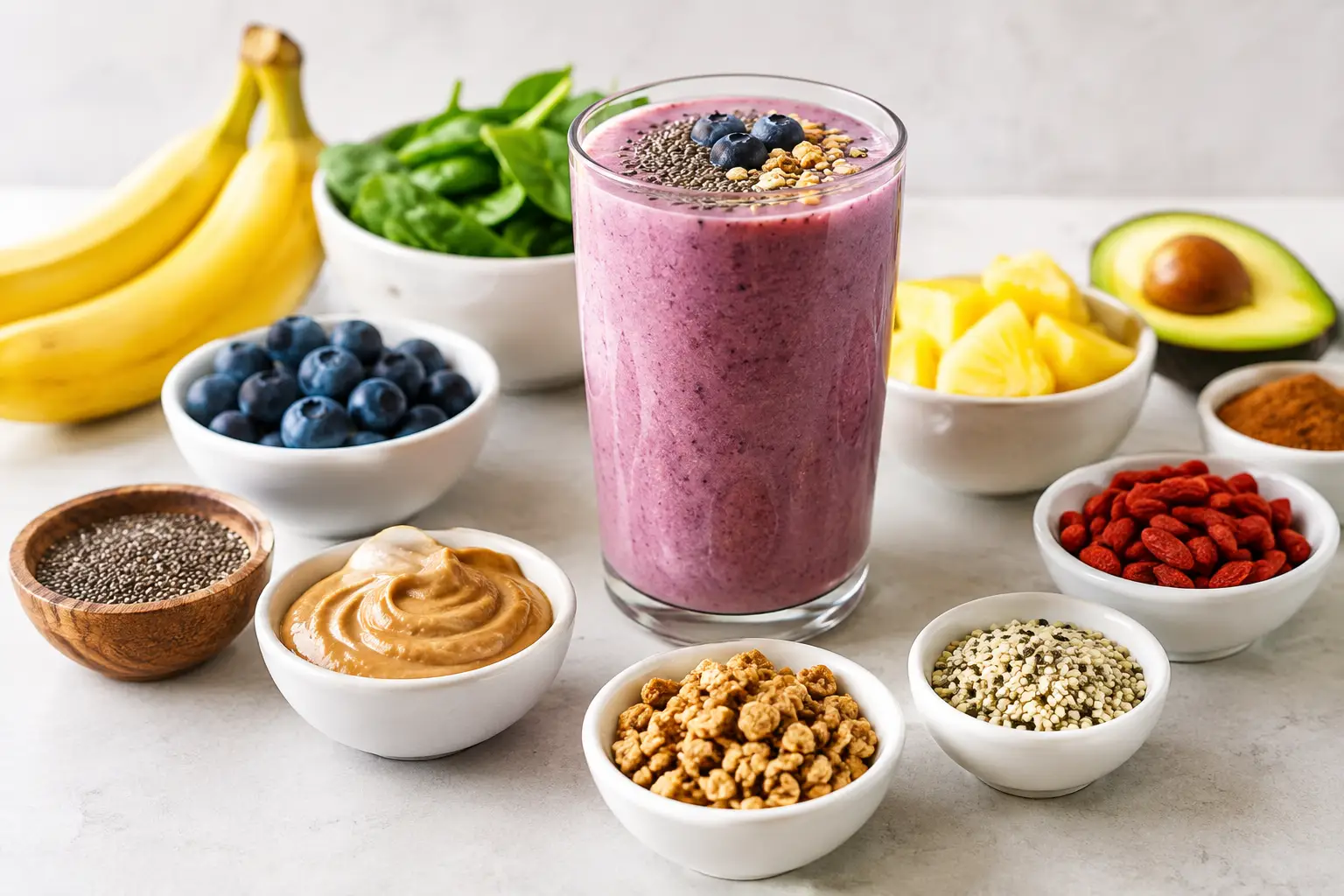
A smoothie can be a quick breakfast, a post-gym pick-me-up, or the colorful sidekick to a lazy Sunday brunch. The trick is choosing healthy smoothie add ins that make it more satisfying without turning your cup into a weird science experiment. A great smoothie should taste like a treat, keep you full for more than 20 minutes, and still let the fruit do its thing.
At Stella Blue Bistro, we respect a smoothie with good vibes: bright flavor, real nourishment, and no unnecessary fuss. Whether you lean classic, vegan, gluten-free, or somewhere between avocado toast and a breakfast burrito, these additions can help you build a blend that feels good from first sip to last slurp. 🥤
Start With What Your Smoothie Needs
Before tossing every superfood in the cabinet into the blender, ask one simple question: what is this smoothie doing for you today? If it is breakfast, you will usually want protein, fiber, and enough healthy fat to make it stick with you. If it is an afternoon snack, fruit plus one filling add-in may be plenty. If it follows a workout, protein and carbohydrates are the headline act.
This is where balance beats excess. Spinach, chia seeds, protein powder, nut butter, oats, and Greek yogurt can all be smart choices, but loading up on all of them at once can make a smoothie overly thick, heavy, or just plain muddy-tasting. Pick two or three supporting players, then let your favorite fruit take center stage.
Healthy Smoothie Add Ins for Staying Power
Protein that does not taste like a chore
Protein helps turn a fruit smoothie into an actual meal. Greek yogurt is a dependable choice for dairy eaters because it brings creaminess, tang, and protein in one scoop. Cottage cheese can do the same job surprisingly well, especially with berries, banana, cocoa, or peanut butter. Blend it thoroughly and the texture disappears into a rich, milkshake-like base.
For plant-based blends, silken tofu is the underrated cool kid. It adds a silky texture and mild flavor without the graininess some protein powders bring. Unsweetened soy milk, pea protein, and a spoonful of hemp hearts are other useful vegan options. Protein powders are convenient, but choose carefully: a powder that is too sweet or overly flavored can take over the whole glass. Start with half a scoop if you are trying a new one.
Fiber for a breakfast that lasts
Fiber keeps smoothies from becoming a quick rush of fruit followed by a mid-morning snack hunt. Rolled oats are one of the easiest additions. A quarter cup gives banana, berry, cinnamon, and coffee-inspired smoothies a cozy, hearty feel. If your blender is not especially powerful, let the oats soak in your milk or nondairy milk for a few minutes first.
Chia seeds and ground flaxseed work in much smaller amounts. One tablespoon is often enough. Chia thickens quickly and adds a pudding-like quality, while ground flax has a nutty flavor that plays nicely with berries and banana. Whole flaxseed tends to pass through without much benefit, so ground is the better move.
White beans may sound like a record scratch in a smoothie recipe, but mild cannellini beans can add fiber and creaminess to a berry or chocolate blend. Rinse them very well, use a modest amount, and let the other flavors lead. This one is not for every smoothie mood, but it is a handy pantry trick.
Healthy fats for a creamier blend
A little fat helps a smoothie feel luxurious and can make it more filling. Nut butters are the obvious favorite for good reason. Peanut butter brings a salty-sweet diner energy to banana and cocoa. Almond or cashew butter is softer and works beautifully with strawberries, dates, or cinnamon.
If nuts are not your thing, try sunflower seed butter or tahini. Tahini has a bold, earthy flavor, so it shines with banana, dates, vanilla, and a pinch of cinnamon rather than delicate tropical fruit. Avocado is another smooth operator. A quarter to half an avocado makes a green smoothie almost impossibly creamy without making it taste like guacamole.
Coconut is tasty, but it is a case of knowing your own preference. Unsweetened coconut flakes or a splash of full-fat coconut milk can give tropical smoothies serious vacation flavor. They are richer and more calorie-dense, though, so use them when that creamy tropical vibe is actually what you want.
Flavor Boosters That Keep Things Interesting
Healthy does not need to mean bland, beige, or joyless. A few strong flavor additions can make a simple smoothie feel like something you would happily order with brunch.
Cocoa powder turns banana, dates, oats, and peanut butter into a chocolatey situation without relying on syrup. Use unsweetened cocoa and balance its bitterness with ripe banana, berries, or a date. Cinnamon adds warmth to apple, banana, pumpkin, and coffee smoothies. A tiny pinch of nutmeg, cardamom, or ginger can go a long way too. Measure with restraint – clove and nutmeg can hijack a drink fast.
Fresh ginger wakes up pineapple, mango, citrus, and carrot blends. Fresh turmeric works in a similar lane, especially with mango and coconut, but it is much better with a pinch of black pepper. That pairing is not just a flavor move; it also helps your body use turmeric’s curcumin more effectively.
Vanilla extract is another quiet hero. A few drops can round out a smoothie made with plain yogurt, tofu, oats, or unflavored protein powder. And a pinch of salt? Trust the process. It can make chocolate, nut butter, and fruit flavors pop, especially when your smoothie tastes a little flat.
Greens Without the Lawn-Clipping Aftertaste
Greens are popular smoothie additions because they bring vitamins and minerals without needing much extra prep. But there is a difference between adding greens and making your smoothie taste like a salad bar.
Baby spinach is the easiest place to start. Its flavor is mild enough to disappear behind banana, pineapple, mango, berries, or cocoa. Frozen spinach is convenient, but use a smaller amount at first because it can make the blend thicker and colder. Kale has a stronger, slightly bitter taste and tougher texture, so it needs a powerful blender and a sweeter flavor partner like pineapple or ripe mango.
For a green smoothie that actually tastes bright, use acid. Lemon or lime juice can cut through earthy greens and rich avocado. Fresh herbs also deserve a turn: mint with pineapple, basil with strawberry, and cilantro with mango can make a familiar smoothie feel unexpectedly fresh. Use a light hand. Herbs should add a spark, not take over the set.
The Fruit Rule: Frozen Is Your Best Friend
Frozen fruit is not technically an add-in, but it changes everything. It gives smoothies that thick, frosty texture without needing a mountain of ice, which can water down flavor. Frozen bananas make blends creamy and naturally sweet. Frozen berries offer punchy flavor and color, while mango and pineapple bring sunny sweetness to greens, ginger, and coconut.
Fresh fruit has its place, especially when local berries, peaches, or apples are looking fabulous. Still, a mix of fresh liquid and frozen fruit usually gives the best texture. If you use all fresh ingredients, add a few ice cubes. If you use all frozen ingredients, begin with less liquid than you think you need and add more slowly.
A Few Combos Worth Repeating
When you are staring into the fridge before work, it helps to have a few no-drama formulas in your back pocket. Try banana, peanut butter, cocoa, oats, and milk for a chocolate-peanut-butter breakfast blend. Go with mixed berries, Greek yogurt or silken tofu, ground flax, and vanilla for something bright and creamy. For a tropical green option, blend mango, pineapple, spinach, ginger, lime, and coconut water.
Want something that leans more coffeehouse than juice bar? Blend cold brew, frozen banana, oats, cinnamon, vanilla, and your preferred protein source. It is smooth, satisfying, and far more interesting than a sad granola bar eaten in traffic.
When a Smoothie Is Not Enough
Even the best smoothie can leave you wanting something to chew. That is normal. If you are using one as a full breakfast and still feel hungry, pair it with toast, eggs, a breakfast sandwich, or a small bowl of oatmeal rather than endlessly adding powders and seeds to the blender. Food is allowed to be a meal, not a math problem.
Likewise, no add-in can rescue fruit that is flavorless or a smoothie that is overly sweet. Taste as you go. Add a squeeze of citrus if it feels dull, a few frozen berries if it needs personality, or more liquid if it has reached cement status.
Keep a few favorites on hand, rotate flavors with the season, and make the blend you are genuinely excited to drink. The healthiest smoothie is usually the one that brings you back for another bright, delicious morning.
Leave a Reply