
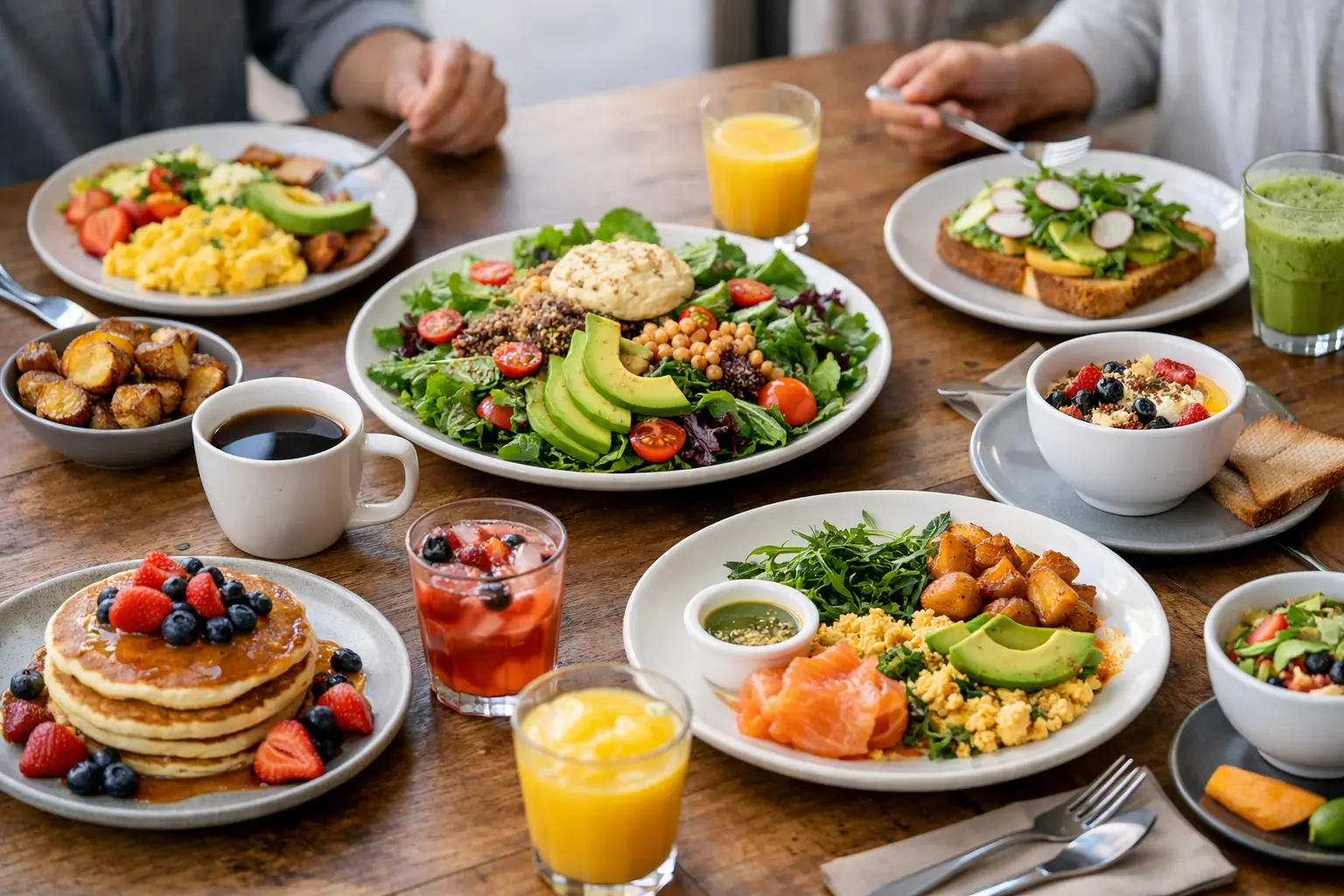
One person wants a bacon, egg, and cheese. Another needs gluten-free. Someone else is fully vegan and would rather skip the sad side salad routine forever. That is exactly why learning how to accommodate mixed diets matters, especially when brunch is supposed to feel fun, easy, and a little celebratory – not like a group text crisis.
The good news is that feeding a table with different preferences is not nearly as complicated as people make it sound. You do not need a dozen separate meals, a culinary degree, or a spreadsheet. You need a little strategy, a menu with range, and the right attitude. Mixed-diet dining works best when nobody feels like the difficult one and nobody gets stuck eating the backup option.
How to accommodate mixed diets without making it weird
The biggest mistake people make is treating dietary differences like a problem to solve instead of a normal part of gathering people around food. Once you stop thinking in terms of restrictions and start thinking in terms of options, the whole thing gets easier.
A good mixed-diet meal has overlap. That means choosing dishes, ingredients, or menu items that can flex in different directions. Eggs can become a breakfast sandwich, a bowl, or a wrap. Potatoes work for almost everyone. Avocado, fruit, coffee drinks, smoothies, and grain-based bowls all pull real weight here. The goal is not to make every single item fit every person. The goal is to make sure every person has something satisfying, filling, and intentional.
That last part matters. People can tell when a menu actually considered them and when it tossed in one token option as an afterthought. A vegan diner wants a real breakfast, not dry toast. A gluten-free guest wants more than a modified plate that arrives missing half the meal. A mixed group feels most relaxed when everyone can order with confidence.
Start with the common ground
If you are planning a brunch with different eaters in the mix, start by asking a simple question: what can everyone enjoy in some form? This keeps you from building the menu around extremes.
Breakfast and lunch are especially friendly for mixed diets because so many staples can be customized. Bowls are a strong example. Build one around greens, rice, potatoes, or quinoa, then layer in eggs, roasted vegetables, avocado, beans, cheese, or a plant-based protein. Wraps also work well because fillings can shift without changing the whole format. Even smoothies can help bridge the gap, especially for people who want dairy-free choices or something lighter.
Shared sides can do a lot of social heavy lifting too. Fresh fruit, home fries, simple salads, and chips with dips tend to play well across different preferences. Just watch the hidden ingredients. A potato dish might be vegetarian in theory but cooked with meat drippings. A veggie soup might still contain dairy. Mixed-diet hosting gets easier when you know where the surprise ingredients live.
Use customization wisely
Customization is your best friend, but only when it is done with some care. Too many choices can make ordering feel like a choose-your-own-adventure novel nobody asked for. Too few choices and people feel boxed in.
The sweet spot is offering a strong base item with a few meaningful swaps. Think gluten-free bread instead of regular toast, plant-based protein instead of meat, oat milk instead of dairy, or a burrito turned into a bowl. Those are practical adjustments that preserve the spirit of the dish instead of stripping it down.
This is one reason brunch spots with broad menus tend to win with groups. If one person wants a hearty sandwich, another wants a vegan scramble, and someone else wants a smoothie and coffee, everybody gets to be in the same place without compromise becoming the main event. That is the vibe people remember.
How to accommodate mixed diets when some needs are non-negotiable
Not every dietary preference carries the same level of flexibility. Some people are choosing how they eat. Others are managing allergies, intolerances, or medical needs. That difference matters.
If someone needs gluten-free food for health reasons, cross-contact matters, not just ingredient labels. If someone has a dairy allergy, removing cheese from a dish may not be enough if the sauce, bread, or prep surface creates an issue. Vegan diners may be comfortable with a shared fryer or may not be, depending on the person. It depends, and asking respectfully is better than assuming.
For hosts, the easiest move is to find out what is a preference and what is a hard boundary before making plans. For restaurants and cafés, clear labeling goes a long way. People feel more at ease when they do not have to interrogate the menu like detectives before ordering lunch.
There is also a difference between accommodating and overpromising. If a kitchen cannot guarantee an allergen-free environment, it should say so plainly. Honest communication beats a vague yes every time.
Build the meal so nobody gets the “special plate”
You know the one. Everyone else gets a stacked, glorious brunch plate, and one person gets a plain, apologetic arrangement that looks like it lost a bet.
That is exactly what mixed-diet dining should avoid.
When you are choosing dishes or a place to eat, look for menus where the vegan, vegetarian, or gluten-free options sound genuinely craveable. A good plant-based wrap should sound like something anyone would order because it is delicious, not because it is the only compliant option. The same goes for gluten-free breakfast items and dairy-free drinks. When the food is built to be appealing from the start, nobody feels singled out.
This is where thoughtful brunch menus really shine. A breakfast burrito can be loaded and comforting whether it includes sausage, roasted veggies, or a plant-based filling. A grain bowl can feel hearty and satisfying, not like a compromise. Coffee drinks and smoothies can meet people where they are, whether they want classic, dairy-free, protein-packed, or fruit-forward.
Mixed diets work better when the mood stays easy
Food matters, but mood matters too. If the whole table is tense about where to eat or what can be ordered, even great food loses some sparkle.
That is why a relaxed, welcoming setting makes such a difference for mixed groups. People want to settle in, order what works for them, and enjoy the company without turning the meal into a negotiation. A playful atmosphere helps. So does a staff that treats dietary questions like a normal part of service instead of a disruption.
For families, this is huge. Parents may be balancing picky kids, one gluten-free adult, one plant-based teen, and a grandparent who just wants a classic breakfast done right. For friend groups, it can be the mix of gym-rat smoothies, comfort-food cravings, and ethical eating choices. Different story, same mission: give everyone something worth showing up for.
That is where a place like Stella Blue Bistro fits naturally into the picture. A menu that covers breakfast sandwiches, wraps, bowls, vegan brunch picks, gluten-free options, coffee drinks, and smoothies makes group ordering feel easy instead of dramatic. That kind of range is not extra – it is what makes the whole outing click.
Practical ways to make mixed-diet brunch easier
If you are hosting at home, keep the structure simple. Build-your-own setups work because people can tailor plates without needing a separate menu for each person. Breakfast tacos, grain bowls, toast bars, yogurt and fruit spreads, or sandwich stations all give flexibility without chaos. Label ingredients clearly, especially sauces and breads, and keep one or two fully inclusive staples on the table so no one is waiting on a custom fix.
If you are ordering for a group, variety beats volume. It is better to order a thoughtful mix of wraps, bowls, sandwiches, salads, sides, and drinks than to order ten of the same thing and hope for the best. Check which items are naturally vegetarian, vegan, or gluten-free, and which ones can be adjusted without losing quality. Some substitutions are smooth. Others turn a great dish into a sad desk lunch. Knowing the difference saves everybody trouble.
If you are choosing a café or caterer, scan for signs of real inclusivity. Are alternative diets represented across the menu, or tucked into one lonely corner? Are dairy-free and gluten-free options clearly identified? Can you imagine a meat-lover, a vegan, and a gluten-free diner all ordering something they are excited about? If yes, you are in good shape.
The best part of figuring out how to accommodate mixed diets is that it usually leads to better food culture overall. People eat together more easily. Hosts stress less. Group chats calm down. And brunch gets to be what it should be – a table full of different people, good plates, strong coffee, and zero weird energy about who can eat what.
Good hospitality is not about making everyone the same. It is about making everyone feel welcome enough to pull up a chair and order what sounds good.
Leave a Reply