
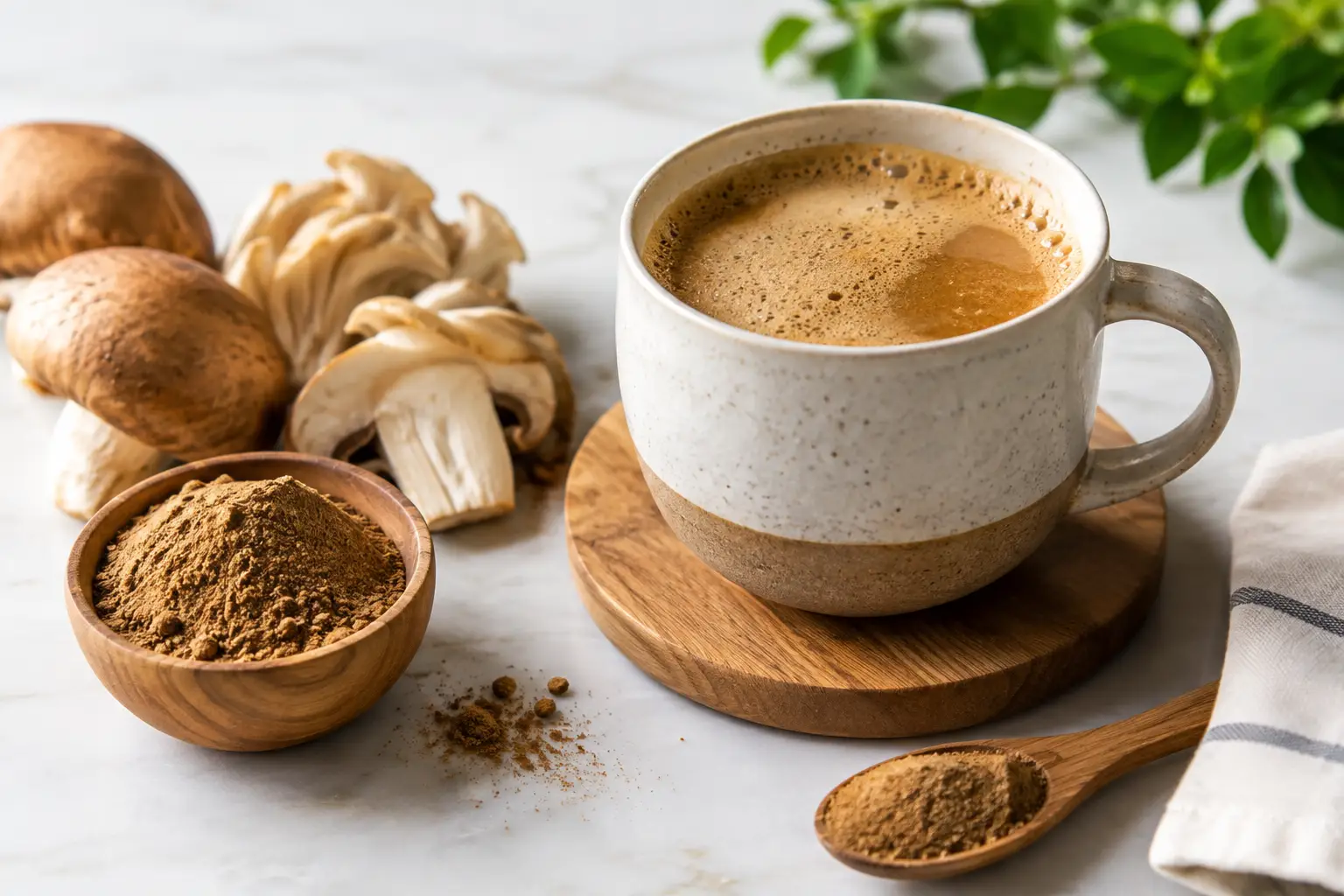
The first sip is where every mushroom coffee drink review gets real. Forget the wellness-label poetry for a minute: Does it taste like coffee? Does it have enough lift to get you through a packed morning, school drop-off, or a long scroll through emails? And are you about to taste something that belongs in the forest floor? Fair questions. The short answer: a good mushroom coffee can be pleasantly familiar, but it is not automatically a better cup for every person.
What Is Mushroom Coffee, Exactly?
Mushroom coffee usually starts with regular ground coffee or instant coffee blended with powdered extracts from functional mushrooms. The usual cast includes lion’s mane, chaga, reishi, cordyceps, and turkey tail. These are not the button mushrooms headed for an omelet. They are fungi traditionally used in teas, tinctures, and supplements, now showing up in coffee tins, single-serve packets, and café-style blends.
The coffee portion still does much of the heavy lifting. Depending on the brand, a mushroom blend may have less caffeine than a standard cup, though the amount varies wildly. Some use half-caf coffee; others simply use a smaller serving of coffee alongside the mushroom extracts. That distinction matters if you are choosing it because conventional coffee makes you feel jittery.
Most blends are built for convenience. Add hot water, stir, and go. Others are ground coffee meant for a drip maker, French press, or pour-over. The format changes the experience more than marketing likes to admit. A powdered packet is fast and practical. Freshly brewed grounds will usually win on aroma and coffee character.
Mushroom Coffee Drink Review: The Taste Test
Let’s address the shaggy little question: does it taste like mushrooms? In a well-made blend, not much. The roast, sweetener, creamer, spices, and flavorings tend to lead the parade. Earthiness may show up at the finish, especially in unsweetened blends, but it is more woody or nutty than savory.
The best versions taste like a mellow, medium-roast coffee with a slightly rounded body. The less successful ones can come off thin, bitter, or dusty – a problem that has more to do with instant coffee quality and poorly dissolved powder than mushrooms themselves. If the ingredient list leans heavily on coconut milk powder, stevia, cinnamon, or vanilla, expect that flavor profile to be front and center.
For a first try, make it the way you would make an ordinary coffee you enjoy. Add a splash of oat milk, dairy milk, or your usual creamer. A little maple syrup can soften earthy notes without turning the mug into dessert. Treating mushroom coffee like a punishment beverage is a fast route to a bad review.
There is a trade-off, though. If you love the bold, rich, freshly brewed flavor of a dark roast, diner coffee, or a proper espresso drink, mushroom coffee may feel a little polite. It can be satisfying as a weekday ritual, but it rarely replaces the sensory joy of a truly great classic cup. That is okay. Not every beverage needs to win the same contest.
The Energy Question: Smooth Focus or Clever Packaging?
Mushroom coffee is often sold with promises of focused energy, calm alertness, immune support, or less of a crash. The caffeine part is easy to understand: less caffeine may mean fewer jitters for some people. The mushroom part deserves more curiosity and less blind faith.
Research on individual functional mushrooms is still developing, and the evidence does not mean every powdered coffee blend will create a dramatic difference in your day. The dose, extract quality, extraction method, your sleep, your breakfast, your caffeine tolerance, and plain old expectation all play a role. A person who swaps a giant sugary cold brew for a modest mushroom blend may feel different, but that does not prove the mushrooms alone did the work.
That does not make the drink pointless. Ritual matters. A lower-caffeine coffee can be a smart option for an afternoon meeting, a remote-work reset, or anyone who wants a warm cup without going full rocket-launch mode. Just keep the expectations grounded. This is coffee with mushroom extracts, not a wizard’s potion in a beige packet.
If you are pregnant, nursing, managing a medical condition, taking medication, or have a mushroom allergy, check with a qualified health professional before making functional mushroom products part of your routine. Also read the label. Some blends contain adaptogens, herbs, sweeteners, or added vitamins beyond coffee and mushrooms.
Ingredients and Labels: Where the Good Stuff Hides
Not all mushroom coffee is made alike, and the front of the package can be much louder than the actual formula. Look past words like premium, energized, and elevated. The useful details are usually on the supplement facts panel or ingredient list.
A transparent brand identifies the mushroom species and tells you whether it uses fruiting body, mycelium, or a blend. Fruiting bodies are the visible mushroom structures most people picture, while mycelium is the threadlike network that grows underneath. Neither term alone tells you everything about quality, but vague language is not a great sign.
It also helps when a brand shares the amount of mushroom extract per serving and whether testing is available for contaminants such as heavy metals. Mushrooms can absorb compounds from their growing environment, so sourcing and testing are more than fancy label decoration.
Then consider the extras. Creamy, sweetened blends can be delicious and convenient, especially on a frantic morning. They can also cost more per cup and contain more sugar or saturated fat than you expected. Unsweetened grounds give you more control, but they ask you to do the mixing and flavor-building yourself. Neither route is morally superior. Pick the one that fits your actual life, not the one that looks best beside a yoga mat.
Is It Worth the Price?
This is the part where many mushroom coffee drinks lose the encore. Compared with standard ground coffee, most are expensive per serving. You are paying for extraction, convenience, branding, packaging, and ingredients beyond beans. If you already buy specialty coffee or coffee-shop drinks a few times a week, the price may feel reasonable. If your favorite breakfast move is a dependable home brew, the premium can be hard to justify.
Try the math before committing to a subscription. Divide the package price by the number of servings, then compare it with what you normally spend. Consider whether you will actually use it daily, or whether it is better as an occasional lower-caffeine option. A product can be enjoyable without needing a permanent spot in the pantry.
For many people, the sweet spot is one mushroom coffee blend and one regular coffee they genuinely love. Use the mushroom version when you want a gentler cup. Keep the classic brew for mornings that call for full flavor, familiar comfort, and a little extra pep. Variety is a much more relaxed strategy than trying to crown one drink the winner of all mornings.
Who Will Probably Enjoy It?
Mushroom coffee makes the most sense for curious coffee drinkers who want to cut back on caffeine without quitting the ritual altogether. It can also suit people who like earthy flavors, appreciate ingredient transparency, and do not mind paying extra for a functional-food experiment.
It may be a miss for purists who want a big, roasty coffee flavor, for people who need a high-caffeine start, or for anyone hoping for overnight superpowers. If a product’s health messaging is the only reason it appeals to you, pause and inspect the label before filling your cart.
At a colorful neighborhood breakfast table, there is room for both the oat-milk mushroom latte crowd and the classic-coffee loyalists. The best cup is the one that tastes good, sits well, and fits the rhythm of your day. Start with a single serving, make it your way, and let your own taste buds call the encore.
Leave a Reply