
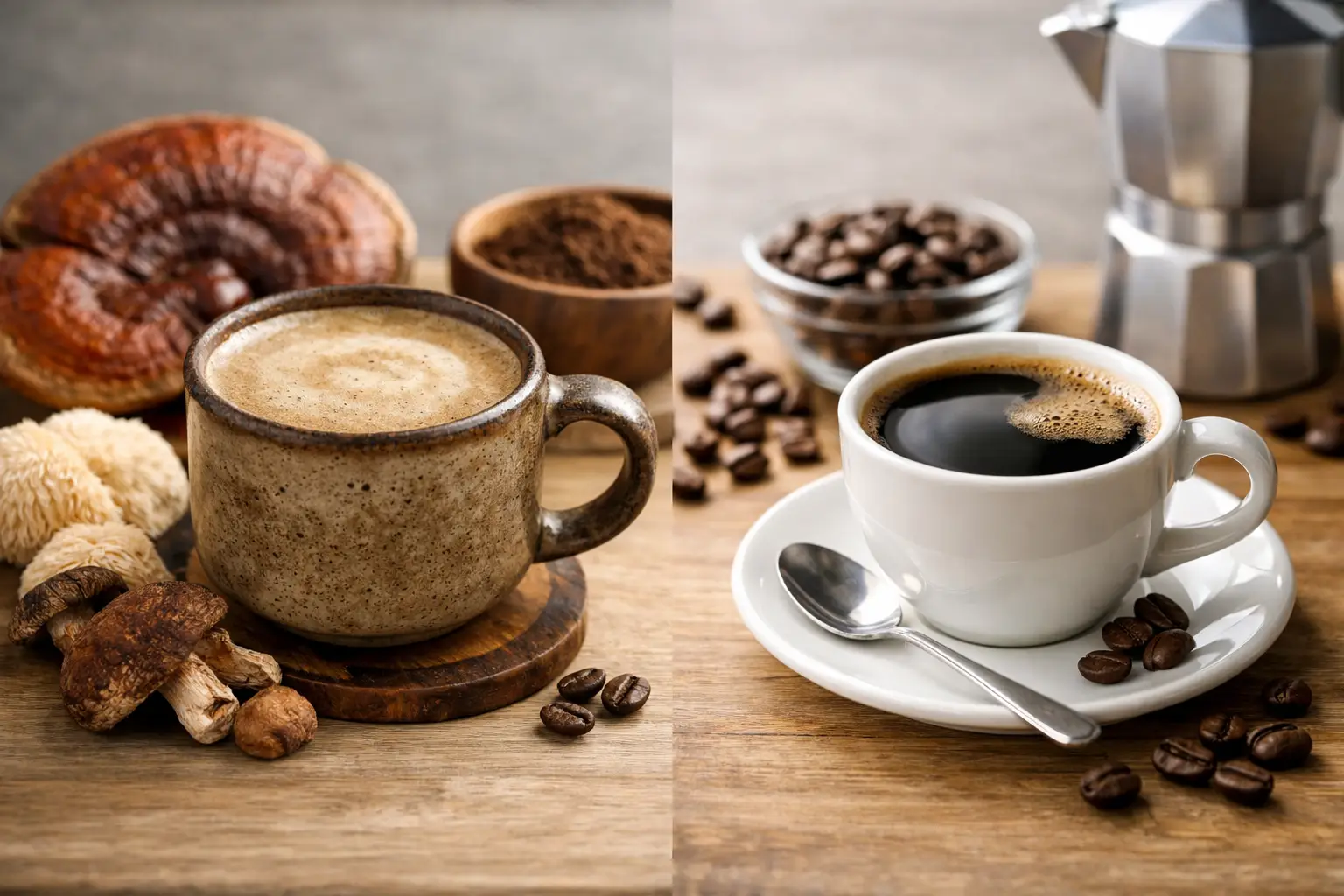
The breakfast order is locked in: maybe a burrito, maybe a bagel sandwich, maybe a smoothie for later. Then comes the real plot twist – mushroom coffee vs regular coffee. One cup is familiar, bold, and beautifully uncomplicated. The other brings functional-mushroom extracts into the mix and promises a gentler kind of lift. Neither needs to be treated like a personality test. It is just about finding the cup that feels right with your morning.
Mushroom Coffee vs Regular Coffee: The Big Difference
Regular coffee is brewed from roasted coffee beans. Its main active ingredient is caffeine, which can help you feel more alert, focused, and ready to answer that email you have been avoiding since yesterday. Flavor varies widely by bean, roast, brewing method, milk choice, and whether you went for a simple drip coffee or a fully loaded iced latte.
Mushroom coffee usually starts with coffee too, then adds powdered extracts from functional mushrooms such as lion’s mane, reishi, chaga, or cordyceps. These are culinary or medicinal-style mushrooms, not the psychedelic kind. Most mushroom coffee blends are instant powders, although some are ground-coffee blends or ready-to-drink options.
The biggest practical difference is caffeine. Many mushroom coffee products contain less caffeine than a standard cup of coffee because part of the coffee is replaced by mushroom extract. That can appeal to people who love coffee’s ritual but do not love the afternoon jitters, shaky hands, or staring-at-the-ceiling bedtime experience.
Still, labels matter. “Mushroom coffee” is not one uniform thing. One brand may contain 40 milligrams of caffeine per serving; another may sit much closer to a normal coffee. Check the package rather than assuming the word mushroom automatically means low-caffeine.
How Do They Taste?
Let us clear the air: a good mushroom coffee should not taste like you tossed a portobello into your mug. Most blends taste earthy, nutty, or mildly cocoa-like, especially when milk, oat milk, cinnamon, or a little sweetness joins the party. But the flavor can be noticeably less bright and roasty than a fresh cup of regular coffee.
Regular coffee wins on range. It can be dark and smoky, fruity and light, cold-brew smooth, espresso-rich, or sweetened into a coffee drink that is basically dessert in a very cute outfit. For people who genuinely love the taste of coffee, the familiar bean-forward flavor is hard to beat.
Mushroom coffee is more of a “try it and see” situation. If you already enjoy matcha, chai, cacao, or earthy flavors, it may fit your rotation. If your ideal cup is a bold iced coffee with plenty of personality, mushroom coffee may feel a little too mellow on its own.
Caffeine, Energy, and the Jitters
The case for regular coffee is wonderfully straightforward: caffeine works. A typical 8-ounce brewed cup can contain roughly 80 to 100 milligrams, though café drinks and larger servings can climb far higher. It can improve alertness and reaction time, but it can also make some people anxious, restless, or crashy, particularly on an empty stomach.
Because many mushroom coffees are lower in caffeine, people may experience a softer lift. That is not necessarily because mushrooms are creating magic energy. Often, it is simply because there is less caffeine in the cup. For a person who gets edgy after a second cold brew, a lower-caffeine blend could be a smart swap.
The mushroom side of the story deserves a little real-talk, though. Functional mushrooms contain compounds that researchers are studying for possible effects on stress, cognition, immunity, and exercise performance. But the evidence is still developing, and it does not prove that every mushroom coffee blend will deliver the dramatic benefits printed on a cheerful package.
Dose, mushroom species, extract quality, and the way a product is made all matter. A sprinkle of mushroom powder is different from a standardized extract. If a blend makes you feel great, awesome. Just keep your expectations grounded: it is a beverage, not a cure-all wearing a groovy label.
Which cup is better for focus?
For an immediate, noticeable jolt, regular coffee usually has the edge because it often contains more caffeine. For steadier-feeling mornings, mushroom coffee may be worth trying if its lower caffeine level agrees with you. Some people also do well with a half-caf regular coffee, tea, or a smaller coffee alongside breakfast. There is more than one road to being awake before 10 a.m.
Ingredients Matter More Than the Trend
A mushroom coffee label can look wildly different from the next one. Some contain only coffee and mushroom extracts. Others add coconut milk powder, MCT oil, sweeteners, spices, collagen, or herbal ingredients. None of those additions are automatically bad, but they change the nutrition, flavor, and fit for your diet.
If you are vegan, check for collagen, dairy, and honey. If you avoid gluten, look for clear allergen information and choose products made with your comfort level in mind. If you are watching added sugar, do not let “functional” distract from the nutrition panel. A drink can include fancy mushrooms and still be closer to a sweetened latte mix than a plain coffee.
People who are pregnant, breastfeeding, managing a medical condition, taking medications, or dealing with a mushroom allergy should ask a qualified health professional before making functional-mushroom blends a daily habit. This is especially true for reishi and other concentrated extracts that may not play nicely with every medication or health situation.
The Breakfast Test: What Are You Drinking It With?
Coffee does not exist in a vacuum. It shows up next to breakfast, during a remote-work sprint, on a rainy Saturday with friends, or in the car when the day is already doing the most.
Regular coffee is a natural match for a hearty breakfast sandwich, a classic egg-and-cheese situation, or a sweet brunch plate. The stronger roast flavor cuts through rich food and feels like the familiar opening track of a good morning. An iced coffee can also bring some welcome contrast to a warm breakfast burrito.
Mushroom coffee can be nice with lighter, plant-forward meals, oatmeal, fruit, or a vegan breakfast bowl, particularly if you like its toasted, earthy profile. Since it may be lower in caffeine, it can be a thoughtful choice for a late-morning cup when you want to keep the day moving without turning lunchtime into a caffeine rodeo.
At Stella Blue Bistro, the best coffee order is the one that works with your appetite, your schedule, and your crew. One friend can go classic coffee, another can opt for a plant-based breakfast, and nobody has to make brunch weirdly complicated. That is the whole point.
Cost and Convenience
Regular coffee is generally easier on the wallet, especially if you brew it at home. Beans, grounds, and simple café coffee offer a lot of choice at a broad range of prices. You can tailor strength, roast, and brewing method without much fuss.
Mushroom coffee is often more expensive per serving, especially branded instant blends with proprietary ingredient lists. Convenience is part of what you are paying for: tear open a packet, add hot water, stir, and go. But if the product is pricey and you mostly want less caffeine, a half-caf coffee or smaller serving of regular coffee may accomplish the same goal for less.
There is also a sustainability angle worth considering. Coffee and mushroom ingredients both have supply chains, packaging, and farming impacts. Instead of assuming one is automatically greener, look at the brand’s sourcing and packaging practices if that is a priority for you.
So, Which One Should You Choose?
Choose regular coffee if you love traditional coffee flavor, want a dependable caffeine boost, enjoy exploring roasts and espresso drinks, or simply do not experience unpleasant side effects from caffeine. It has earned its permanent spot in the breakfast hall of fame.
Try mushroom coffee if you are caffeine-sensitive, curious about functional ingredients, want a gentler afternoon option, or enjoy earthy flavors. Start with one serving rather than replacing every cup immediately. Pay attention to how you feel, how you sleep, and whether you actually enjoy the taste enough to make it a habit.
Your ideal coffee routine might include both. A bright regular coffee for busy mornings, a lower-caffeine mushroom blend for slower days, and plenty of water somewhere between the brunch plans and the chaos. Pick the cup that makes your day feel better – not the one that makes the loudest promise. ☕🍄
Leave a Reply