
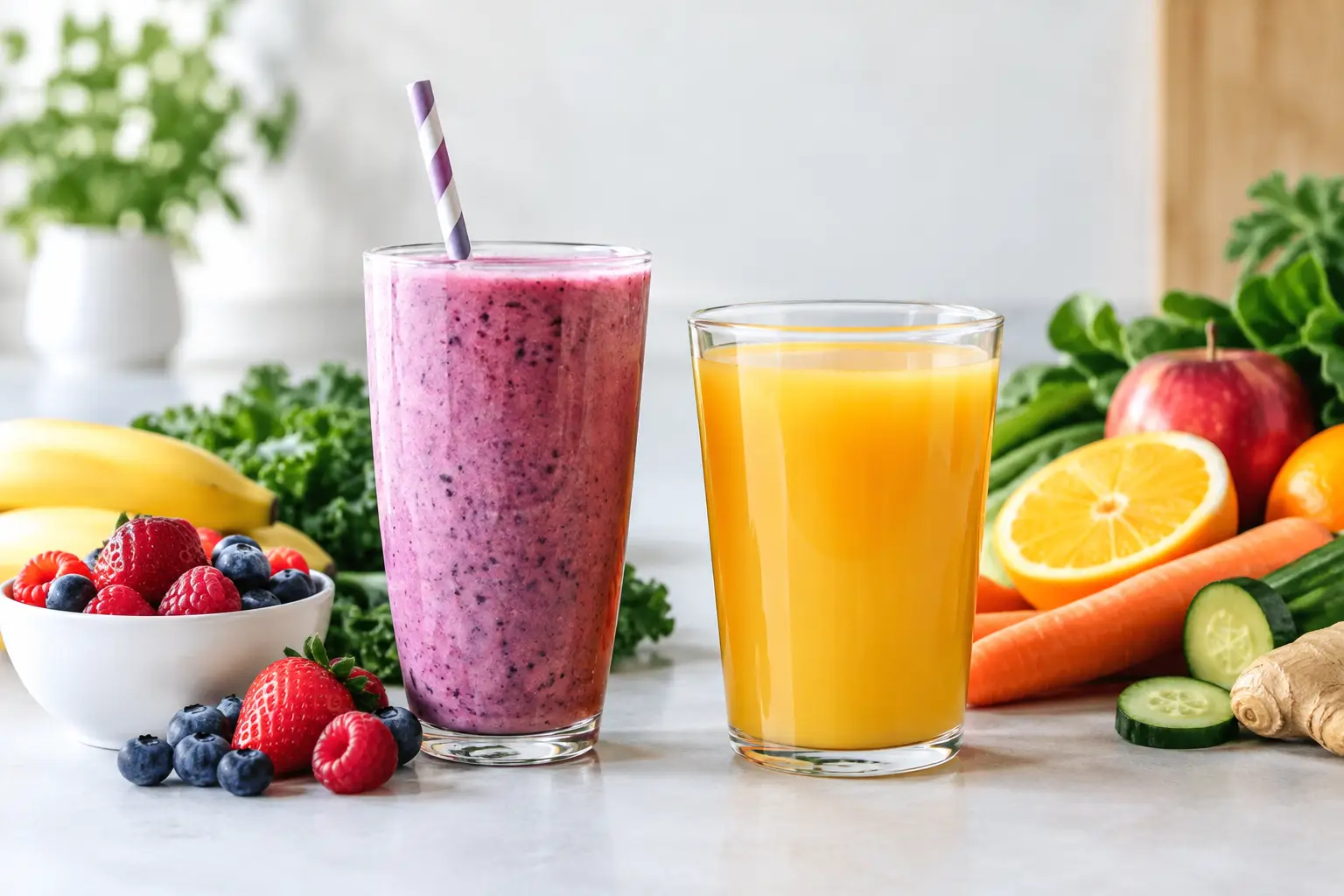
A bright green drink can look like a health halo, but smoothies versus juices is not a battle with one automatic winner. The better choice depends on what is in the cup, what you have eaten already, and whether you need a quick refresh or something that can carry you through a busy morning.
At brunch, that difference matters. A juice can feel crisp and electric next to a breakfast sandwich. A smoothie can be the move when meetings, errands, school drop-off, and real life are all waiting right outside the door. Here is how to choose your sip without turning breakfast into a chemistry exam.
Smoothies Versus Juices: The Big Difference
The simplest distinction is what stays in the drink. Smoothies are made by blending whole fruits and vegetables, so the pulp and much of the fiber remain. They are usually thicker, more filling, and closer to a small meal or snack, especially when they include ingredients like banana, berries, oats, yogurt, nut butter, seeds, or plant-based protein.
Juices separate liquid from much of the solid plant material. That gives them their lighter texture and clean, concentrated flavor. Think bright orange citrus, sharp ginger, sweet apple, or earthy beet. Because the fiber is mostly removed, juice generally moves through the stomach faster and does not tend to keep you full for as long as a smoothie.
Neither format is automatically “healthy” just because it contains fruit. A smoothie loaded with syrups, sweetened yogurt, ice cream, or oversized portions can become dessert in a straw. A juice made mostly from vegetables with a little lemon or apple can be a punchy, refreshing addition to a balanced meal. The ingredient list tells the real story.
When a Smoothie Makes More Sense
Choose a smoothie when you want staying power. The blend of fiber, fluid, and other add-ins can help make it more satisfying than juice alone. That is especially handy if breakfast needs to hold you over until lunch, or if you know you are the kind of person who gets snacky at 10:47 a.m. with no warning.
A smoothie can also be a friendly option for mixed-diet households and brunch crews. Dairy yogurt can add creaminess and protein, while plant-based yogurt, soy milk, oat milk, nut butter, hemp seeds, or chia can create a vegan-friendly blend with plenty of character. There is no need for a one-size-fits-all cup.
Fruit brings sweetness, but balance is the groove. Pairing fruit with ingredients that add protein or fat can make the flavor less candy-like and the drink more substantial. A berry-banana smoothie with peanut butter tastes rich and familiar. A mango blend with coconut and lime leans tropical. Spinach can disappear into a berry smoothie surprisingly well, which is useful knowledge for anyone trying to negotiate with a tiny, suspicious food critic.
Smoothie timing: breakfast, lunch, or post-workout
For breakfast, a smoothie works best when it has enough substance to count as food, not just a colorful sidekick. If you are having it after a workout, fruit can provide carbohydrates while protein-rich additions may support your recovery goals. After an intense session, though, the exact needs vary based on your workout, health goals, and the rest of your day.
If you are ordering a smoothie alongside a full brunch plate, consider sharing it or choosing a smaller size. A hearty smoothie plus a burrito, bowl, or stack of pancakes may be exactly the joyful weekend plan you intended. It is simply more food than people expect because drinks are easy to underestimate.
When Juice Is the Right Call
Juice shines when you want something cold, bright, and easy to sip. On a warm afternoon, a fresh juice can feel more refreshing than a thick smoothie. It is also a great companion to a meal that already contains protein, whole grains, or other filling ingredients.
There is a reason citrus, pineapple, ginger, carrot, and beet juices have such a following. Their flavors are direct and lively. Where a smoothie blends ingredients into one creamy chorus, juice lets sharper notes take the mic. Ginger wakes things up. Lemon adds snap. Beet brings earthy sweetness and a dramatic color that does not need a filter.
Because juice is less filling, it can make sense before a meal when you want something light, or beside a breakfast sandwich or wrap when your food is doing the heavy lifting. If you are not very hungry but want a little something, a small juice may feel more appealing than forcing down a larger meal.
That said, juice can be surprisingly high in natural sugar when it is mostly fruit. Natural does not mean bad, but it does mean the portion and context matter. Drinking a fruit-forward juice on an empty stomach may leave some people hungry again quickly. Adding a meal, a handful of nuts, or another source of protein and fiber can help it feel more balanced.
How to Read the Cup Like a Pro
You do not need to memorize nutrition charts to make a smart order. Start by asking one practical question: am I thirsty, hungry, or both? If you are mostly thirsty and want a flavor boost, juice may hit the spot. If you are hungry and need a portable breakfast, a smoothie is usually the more useful pick.
Then look for what creates the flavor. Whole fruit, vegetables, unsweetened milk, plain yogurt, nut butter, seeds, and spices are all ingredients that can bring personality without relying entirely on added sweeteners. Dates, honey, maple syrup, and fruit juice are not forbidden ingredients, but they can push sweetness up quickly when combined with several fruits.
Portion size matters, too. A 12-ounce drink and a 24-ounce drink are not interchangeable, especially when the larger one contains multiple servings of fruit or rich add-ins. If you are ordering for a kid, a smaller serving is often plenty. If you are fueling a long morning, a more substantial smoothie may be reasonable. Context is the whole playlist.
For people managing diabetes, digestive conditions, kidney concerns, food allergies, or medication interactions, personal guidance matters more than broad wellness rules. Some juices and smoothie ingredients can affect blood sugar, digestion, or medication absorption differently. A doctor or registered dietitian can help tailor choices to your needs.
The Flavor Test: Pick What You Will Actually Enjoy
The best drink is not the one that looks most virtuous on a menu. It is the one you genuinely enjoy and can fit into your routine. If green juice tastes like mowing the lawn to you, forcing it down is not a personality trait. Try a blend with apple, pineapple, lemon, or cucumber to soften the edge.
If smoothies feel too heavy, go lighter with a fruit-and-milk blend rather than a recipe packed with oats, nut butter, and multiple boosters. If you love a creamy smoothie but want less sweetness, ask for more berries and fewer tropical fruits, or choose a base without added syrup.
At Stella Blue Bistro, that flexibility is part of the fun. A good café drink should meet you where you are: vegan, gluten-free, running late, lingering over brunch, or simply chasing something delicious with a little color in its soul.
A Better Way to Order
There is no need to crown a champion between smoothies and juices. Treat them like different tools in the same very tasty toolbox. Juice is often the lighter, brighter choice for refreshment and flavor. Smoothies tend to bring more texture, fiber, and meal-like staying power.
Next time you are deciding, listen to the practical cue beneath the craving. Need a quick, cold reset with your breakfast? Go juice. Need a portable bite that can keep pace with your day? Blend it up. And if you want the fun answer, bring a friend, order one of each, and let brunch do what brunch does best. ☀️
Leave a Reply