
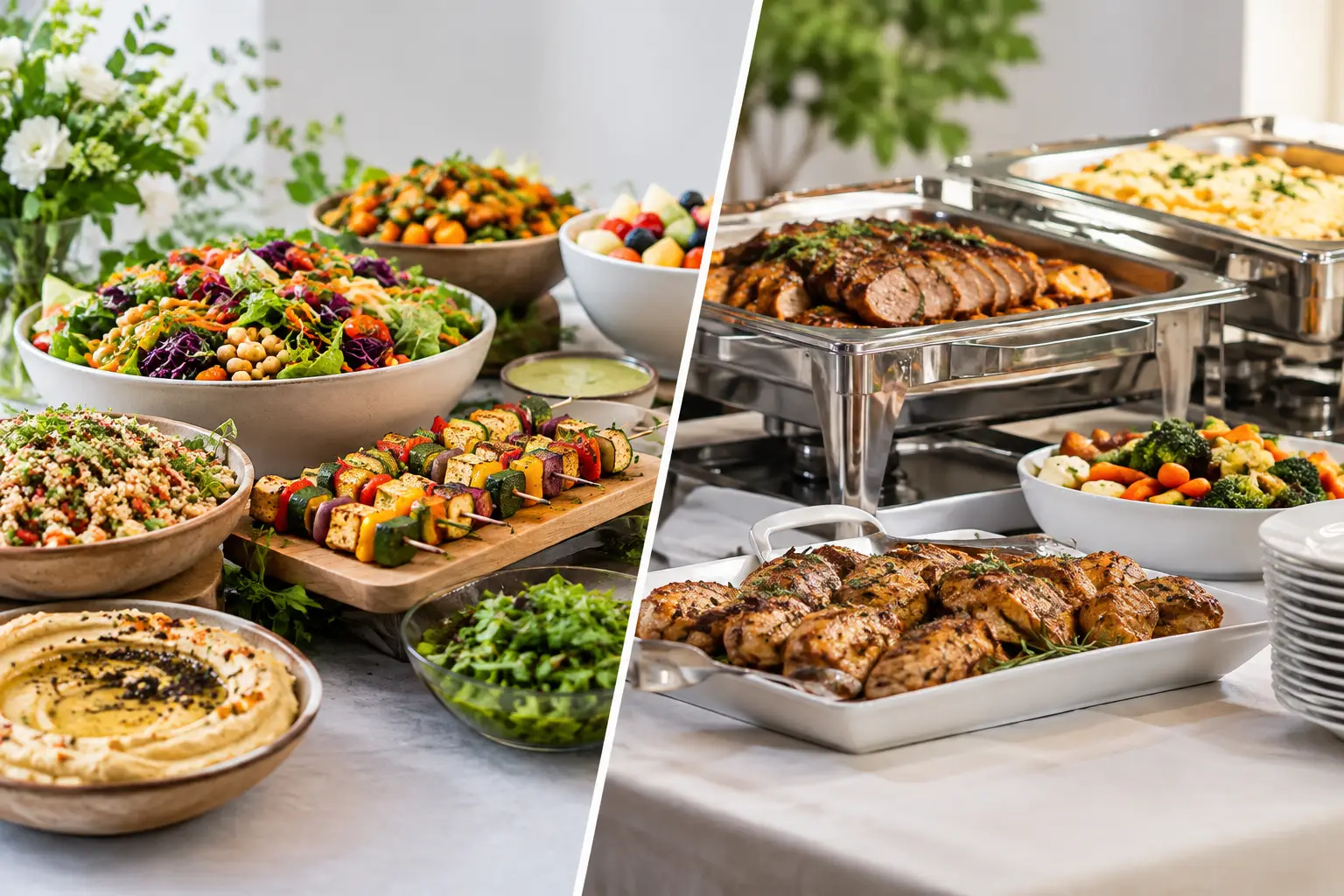
A catering spread should make people feel looked after, not send them into a game of menu detective. That is the real question behind vegan catering vs traditional catering: what will make your guests happy, full, and ready to come back for another plate? Whether you are planning an office lunch, a birthday brunch, a baby shower, or a laid-back Sunday gathering, the strongest answer is rarely an all-or-nothing one.
Great event food has personality. It also has a job to do. It needs to travel well, hold up through conversation, suit the time of day, and give every guest something they are genuinely excited to eat. Here is how to choose a catering direction that feels generous rather than complicated.
Vegan Catering vs Traditional Catering: The Real Difference
Traditional catering usually centers animal-based favorites: egg sandwiches, chicken wraps, cheese-heavy pastas, deli platters, yogurt, pastries, and meat-forward entrées. There is a reason these choices stay popular. They are familiar, comforting, and easy for many guests to recognize at a glance.
Vegan catering skips meat, dairy, eggs, and other animal products. But it is not a sad side salad assigned to the corner of the buffet table. Done well, it can mean loaded breakfast burritos with seasoned potatoes and plant-based fillings, colorful grain bowls, crunchy wraps, roasted vegetables, hearty beans, fresh fruit, dairy-free smoothies, and baked goods that do not taste like a compromise.
The biggest difference is not simply ingredients. It is the starting point. Traditional menus often ask, What classic dish will everyone expect? Vegan menus ask, How do we create satisfying flavor and texture without relying on animal products? Both approaches can be seriously delicious. The difference comes down to your guests, your event, and how much menu variety you want to build in.
When Traditional Catering Makes Perfect Sense
There is no need to pretend a classic breakfast sandwich platter does not have a place in the universe. For a casual morning meeting, a family brunch with known favorites, or an event where most guests expect familiar comfort food, traditional catering can be the easy win.
It is especially useful when the menu is simple and the crowd is predictable. If you are feeding a small team that has been requesting bacon, egg, and cheese all week, a traditional breakfast spread may be exactly right. Similarly, dishes with eggs, cheese, or chicken can feel filling and approachable for guests who are less adventurous with food.
Traditional catering can also be easier to plan when you have tight expectations around a specific dish. Want a tray of breakfast sandwiches, classic wraps, or a lunch lineup built around deli-style staples? Those formats are straightforward, satisfying, and familiar.
The trade-off is that a fully traditional menu can leave some people with very few real choices. A vegetarian may be able to pick around the meat. A vegan, dairy-free guest, or someone avoiding eggs may be left with fruit, chips, and the polite phrase, No worries, I ate before I came. That is not the brunch energy anyone is aiming for.
Why Vegan Catering Can Make a Group Feel More Included
Vegan catering can be a smart choice when you are feeding a mixed crowd and do not know every guest’s dietary needs. A well-designed plant-based menu often works for vegans, many vegetarians, guests avoiding dairy, and anyone who simply wants something fresh and flavorful. It can also bring a welcome change of pace to the usual catered lunch rotation.
The key word is well-designed. Plant-based catering needs substance. A platter of raw vegetables is lovely, but it is not lunch. The best vegan spreads build in protein, carbs, crunch, sauce, and satisfying portions. Think seasoned tofu or beans, roasted potatoes, rice or grains, avocado, bright vegetables, fresh herbs, and a sauce with some zip. People remember the smoky, tangy, messy-in-a-good-way bites, not the dietary label.
For daytime events, vegan breakfast and lunch food can feel particularly lively. Burritos, wraps, bowls, smoothies, and sandwiches can be packed with color and flavor without becoming heavy enough to put the whole office into a post-lunch nap. That matters when the agenda includes work, games, gifts, or a dance floor later on.
There are a few practical considerations. Vegan items should be clearly labeled, and they should be prepared separately from animal-based items when you are serving guests with firm dietary boundaries. If you are ordering for a large crowd, ask about ingredients in sauces, breads, baked goods, and dressings. Tiny details can make a big difference.
The Best Move for Most Events: A Menu With Both
For many gatherings, the vegan catering vs traditional catering debate ends with a much better idea: serve both. A mixed menu is not indecisive. It is hospitable.
Start with a few crowd-pleasing anchors that fit your event. For brunch, that might mean classic breakfast sandwiches alongside a substantial vegan burrito or veggie-packed bowl. For lunch, pair familiar wraps with plant-based wraps, a colorful salad, a potato side, and a dessert option everyone can enjoy. Guests can choose what feels good to them without having to make a whole announcement about it.
This approach works especially well for office events, graduation parties, family celebrations, and casual showers, where dietary preferences can vary wildly. One guest wants turkey. Another is vegan. Someone else skips gluten. A thoughtfully varied spread lets the host stop guessing and lets everyone get on with the fun part: eating.
At Stella Blue Bistro, that kind of mix is part of the good-time philosophy. Breakfast and lunch should not make plant-based guests feel like an afterthought or make traditional diners feel like they have wandered into an alternate food dimension. There is room at the table for both.
Flavor Matters More Than the Label
Guests do not rave about catering because it was technically vegan or technically traditional. They rave because the food hit. The wrap was fresh, the potatoes had a crispy edge, the coffee showed up hot, the sauces had flavor, and there was enough food for seconds.
When you are choosing a caterer or building an order, look beyond broad menu categories. Ask what gives the dish its flavor. Is there a savory spread, a bright salsa, roasted vegetables, pickled onions, spicy sauce, or a fresh herb finish? Are the vegan selections treated as signature dishes, or are they just substitutions? Is the traditional food balanced with something crisp and colorful?
This is where brunch shines. Comfort food does not have to be beige. A solid catering menu can bring together cozy breakfast favorites, bright fruit, colorful bowls, bold coffee drinks, and options with enough personality to match the occasion.
Budget, Portions, and Event Logistics
Cost can vary in either direction. Some plant-based ingredients are economical, while specialty dairy-free products or meat alternatives can raise the price. Traditional catering can be cost-effective for simple sandwich or pasta trays, but premium meats, cheeses, and individually packed meals add up quickly. The better question is not which category is always cheaper. It is which menu gives your specific group the most value.
Portion planning matters, too. A 9 a.m. meeting may call for lighter breakfast portions plus coffee and fruit. A noon office lunch needs more substantial mains. For a weekend party that runs for hours, variety keeps people happy: filling entrées, shareable sides, beverages, and something sweet.
Do not forget the unglamorous details that save an event. Confirm the guest count, delivery time, serving utensils, labels, and whether food needs to stay hot or cold. If dietary needs are a priority, share them early rather than adding a last-minute request the night before. A little planning keeps the buffet table peaceful and the host out of panic mode.
Choose the Menu That Feels Like Your Guest List
If your group loves classic comfort food and has few dietary restrictions, traditional catering may be the clear call. If you are hosting a plant-based crowd or want a menu that works for guests avoiding dairy and eggs, vegan catering deserves center stage. And if your guest list looks like most real-life guest lists, full of different tastes and needs, build a menu with both.
The kindest catering choice is the one that gives people a real meal, not a backup plan. Bring the burritos, bring the wraps, bring the coffee, bring the colorful bowls. Then let your guests find their favorite bite and settle into the good stuff: the conversation, the celebration, and maybe one more pastry before they head out. ✌️
Leave a Reply