
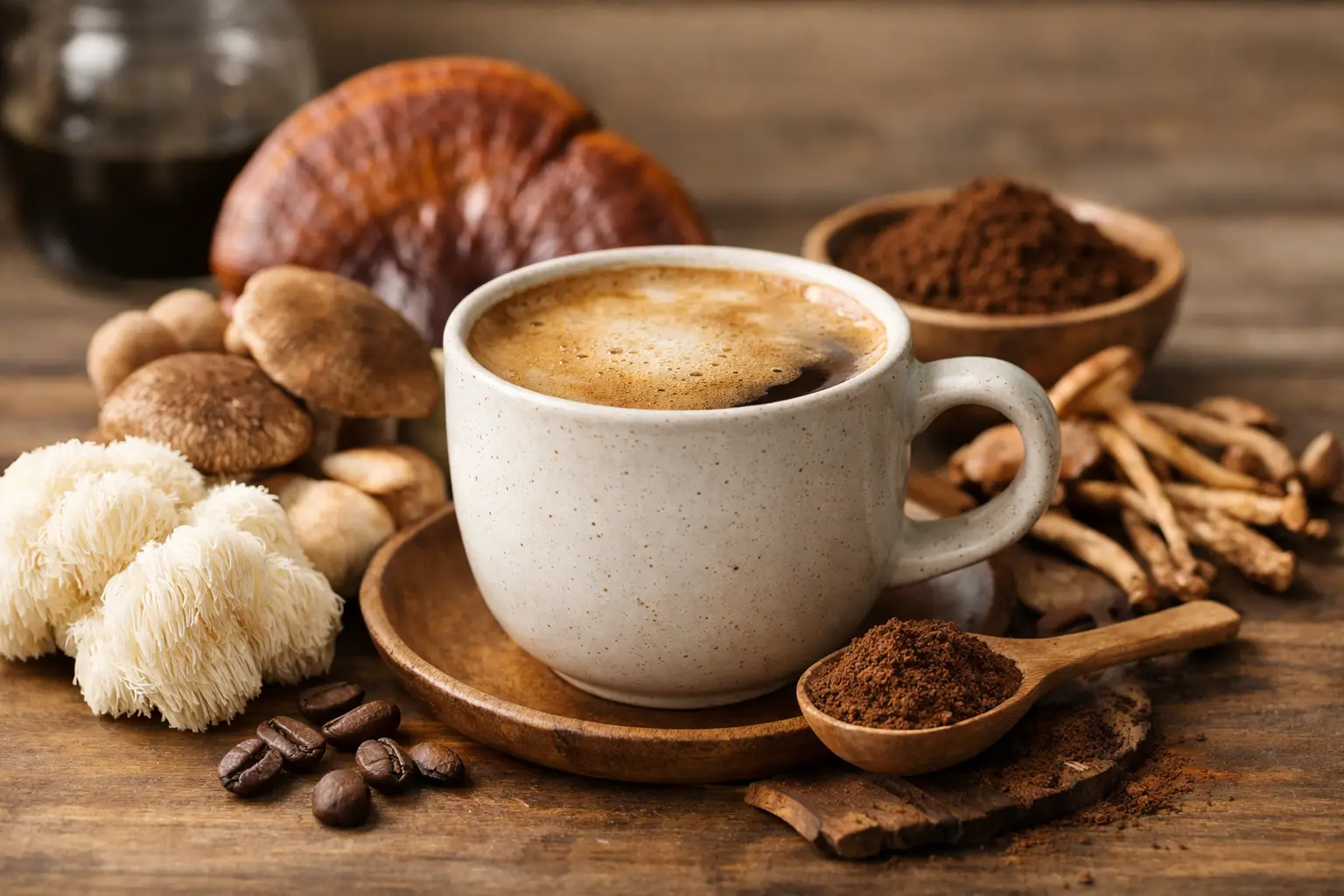
That little packet of coffee with lion’s mane on the label is not a prank from the forest. So, what is mushroom coffee? Usually, it is regular ground or instant coffee blended with extracts from functional mushrooms such as lion’s mane, reishi, cordyceps, chaga, or turkey tail. It is still a coffee drink, not a cup of sautéed portobellos, and it is definitely not psychedelic.
The buzz around it makes sense. Plenty of people want their morning ritual to feel a little more intentional, but they do not necessarily want to give up the smell of fresh coffee or the gentle jolt that gets the day moving. Mushroom coffee lands right in that space: familiar, slightly funky in a good way, and worth understanding before you make it your new personality.
What Is Mushroom Coffee, Exactly?
Mushroom coffee is a coffee product that combines coffee beans with powdered mushroom extracts. The mushrooms used are generally medicinal or functional varieties, meaning they have a long history of use in traditional wellness practices. They are not the white button mushrooms that end up on a breakfast plate.
Most brands use extracts rather than whole dried mushrooms. The mushrooms are processed to concentrate certain compounds, then dried into a fine powder that can mix into instant coffee, ground coffee, pods, or ready-to-drink beverages. That processing matters because a teaspoon of plain mushroom powder and a tested extract are not necessarily the same thing.
The most common varieties each get their own moment in the spotlight. Lion’s mane is often marketed for focus and mental clarity. Reishi has a calmer, wind-down reputation. Cordyceps is associated with energy and exercise support, while chaga and turkey tail are usually positioned around general wellness and antioxidant content. Those are marketing categories and traditional uses, not guarantees that every cup will deliver a dramatic effect.
A useful reality check: mushroom coffee does not contain magic mushrooms or psilocybin. It should not make you hallucinate, change your perception, or turn a Wednesday meeting into a psychedelic jam session. It is simply coffee paired with non-psychoactive mushroom extracts.
What Is in a Typical Cup?
The answer depends on the brand. Some products are mostly instant coffee with a small amount of mushroom extract. Others use a lower-caffeine coffee blend and a more noticeable dose of several mushrooms. A few skip coffee entirely and sell herbal, caffeine-free mushroom beverages under the same broad umbrella.
Look at the package with a little healthy skepticism. The ingredient list should clearly identify the coffee, the mushroom species, and the amount of extract per serving. Better labels may also tell you whether the product uses the fruiting body, the mycelium, or both.
The fruiting body is the visible mushroom cap-and-stem part most people picture. Mycelium is the root-like network that grows beneath the surface. Neither is automatically bad, but products made with mycelium can sometimes include more grain or growing medium. If a brand makes a big wellness claim while keeping its actual mushroom dose vague, that is a cue to keep walking.
Some blends add extras like adaptogenic herbs, MCT oil, coconut milk powder, collagen, sweeteners, or spices. That can be delicious, but it also changes the nutrition facts and may not work for every dietary preference. A plant-based cup can still contain dairy-derived ingredients, and a low-sugar label can still have a strong stevia or monk fruit finish.
Does Mushroom Coffee Taste Like Mushrooms?
Usually, not much. Most mushroom coffee tastes like a lighter, earthier coffee, especially when it is made with instant coffee. The mushroom notes may read as nutty, cocoa-like, woody, or slightly bitter rather than like a bowl of mushroom soup.
Coffee lovers with very specific standards may notice that many blends have less body and less boldness than a freshly brewed dark roast. That is the trade-off. If you love a deep, rich diner-style cup, a mushroom blend may feel a little thin on its own. A splash of oat milk, a cinnamon shake, or using the blend in an iced latte can make it more your speed.
If you are mushroom-curious but coffee-serious, start with a small serving rather than buying a giant bag. Your taste buds do not need to commit to a long-term relationship on the first date.
Can Mushroom Coffee Actually Help You Feel Better?
This is where the conversation needs less hype and more straight talk. Functional mushrooms contain compounds that researchers are studying, including beta-glucans and other bioactive substances. There is early and ongoing research into their potential effects on immune function, stress, cognition, fatigue, and inflammation.
But research on mushroom coffee itself is limited. A study involving a concentrated mushroom extract is not the same as evidence that a coffee blend with a modest amount of that extract will improve your focus, immunity, or energy. The dose, preparation, mushroom species, product quality, and the person drinking it all matter.
For some people, the biggest benefit is not an exotic superpower. It is simply switching from a large, high-caffeine coffee to a blend with less caffeine. If that helps you avoid midafternoon jitters, sleep better, or feel less wired, that is a real win. It just may be more about caffeine management than the mushroom blend itself.
Think of mushroom coffee as a food and beverage choice, not a treatment plan. It cannot replace sleep, balanced meals, prescribed medication, or medical care. Any product promising laser-sharp focus, instant stress relief, or a fully upgraded immune system belongs in the same mental folder as miracle diet ads and suspiciously shiny before-and-after photos.
How Much Caffeine Does Mushroom Coffee Have?
There is no single answer. Some mushroom coffees contain about half the caffeine of a standard cup, while others are very close to regular coffee. Instant blends can be lower in caffeine, but that is not a rule. Always check the label if caffeine is the reason you are considering a switch.
Lower caffeine can be helpful if regular coffee makes you shaky, anxious, or likely to stare at the ceiling at 1 a.m. On the other hand, someone who depends on a full-strength cup before an early commute or a long shift may find mushroom coffee underwhelming. You can also treat it as a second cup or an afternoon option rather than replacing your main morning coffee.
Remember that caffeine totals add up across coffee, tea, soda, energy drinks, and pre-workout products. The low-key vibe of a mushroom package does not mean the drink is automatically caffeine-free.
How to Choose a Mushroom Coffee Without Falling for the Label Glow
A good mushroom coffee should make it easy to understand what you are drinking. First, check whether it contains actual coffee and how much caffeine is in each serving. Then look for the specific mushroom species and the amount included, rather than a mysterious proprietary blend with no numbers attached.
It is also smart to check for third-party testing or clear quality standards, especially if the product makes big claims. Mushrooms can absorb substances from their growing environment, so reputable sourcing and contaminant testing are meaningful details, not fancy packaging filler.
Choose a format that fits your routine. Instant packets are handy for travel, office drawers, and low-effort mornings. Ground blends suit people who want to use their own brewer. Ready-to-drink cans can be convenient, though they may come with added sugar or a higher price per serving.
Finally, consider the rest of the ingredient panel. If you have allergies, follow a vegan diet, avoid gluten, are sensitive to sugar alcohols, or simply hate coconut, those details can decide whether a blend becomes a repeat order or a forgotten cabinet resident.
Who Should Be Careful With Mushroom Coffee?
Most healthy adults can usually approach mushroom coffee as they would any new coffee or supplement-style product: start small and see how they feel. Still, it is wise to talk with a qualified healthcare professional before using it regularly if you are pregnant or breastfeeding, have a mushroom allergy, manage an autoimmune condition, take blood thinners or diabetes medication, or are preparing for surgery.
People with sensitive stomachs should also go easy at first. Coffee itself can cause reflux or digestive discomfort, and extra ingredients in a blend may not agree with everyone. If a product makes you feel off, you do not need to push through for the wellness points.
Mushroom coffee is best when it adds a little curiosity to a routine you already enjoy. Order the breakfast burrito, settle into the colorful café energy, and choose the cup that actually makes your morning feel good. Whether that is a classic brew, an oat milk latte, or a mushroom blend with a mild earthy twist, your daily ritual should taste like something you want to come back to.
Leave a Reply